Eco-Friendly & Non-Toxic Bed Frames for a Healthy Bedroom
Non-toxic bed frames made from solid wood, natural finishes, and clean materials — no formaldehyde, no MDF, no mystery chemicals off-gassing while you sleep.

You spend roughly a third of your life in bed. Your face is inches from your mattress for 7-8 hours a night, every night. Most people think about what's in their mattress — but they completely ignore what's holding it up.
After recycling over 1.15 million mattresses and thousands of bed frames, I can tell you that the average budget bed frame is full of stuff you don't want to breathe. Particleboard panels glued together with formaldehyde-based resins. Chemical stains and lacquers sprayed on in overseas factories. MDF components that off-gas for years. I've broken down bed frames that still smell like chemicals after sitting in someone's bedroom for three or four years.

Our trucks loaded with mattresses and bed frames headed to the recycling facility — we process thousands every month.
I wrote a whole article about toxins hiding in your bedroom — covering everything from mattress foams and fire retardants to bed frame materials and finishes. If you haven't read it, start there. It explains the full picture of what you're actually sleeping on and breathing in. For a deep dive specifically on bed frame materials, see my complete bed frame toxicity guide.
This article is the action step. These are bed frames built with clean materials, transparent manufacturing, and finishes that won't off-gas into your bedroom air.
What Makes a Bed Frame "Non-Toxic"
This term gets thrown around loosely, so let me be specific about what I look for. I've seen enough bed frames at the end of their lifecycle to know exactly which materials hold up and which ones break down — both structurally and chemically.
Solid Wood vs. Engineered Wood
This is the big one. Solid hardwood — oak, maple, walnut, poplar, rubberwood, acacia — contains no added formaldehyde. It's just wood. Engineered wood products like MDF, particleboard, and plywood are made by binding wood chips or fibers together with formaldehyde-based adhesives (usually urea-formaldehyde resin). MDF is roughly 10% formaldehyde by composition. Particleboard is about 12%. These materials off-gas formaldehyde into your bedroom air for 3-7 years, with the highest emissions in the first year.
When I break down cheap bed frames at my facility, the difference is obvious. Solid wood frames are just wood all the way through. Budget frames? Crack them open and you see layers of compressed sawdust held together with resin. That's what's been off-gassing next to your face every night.
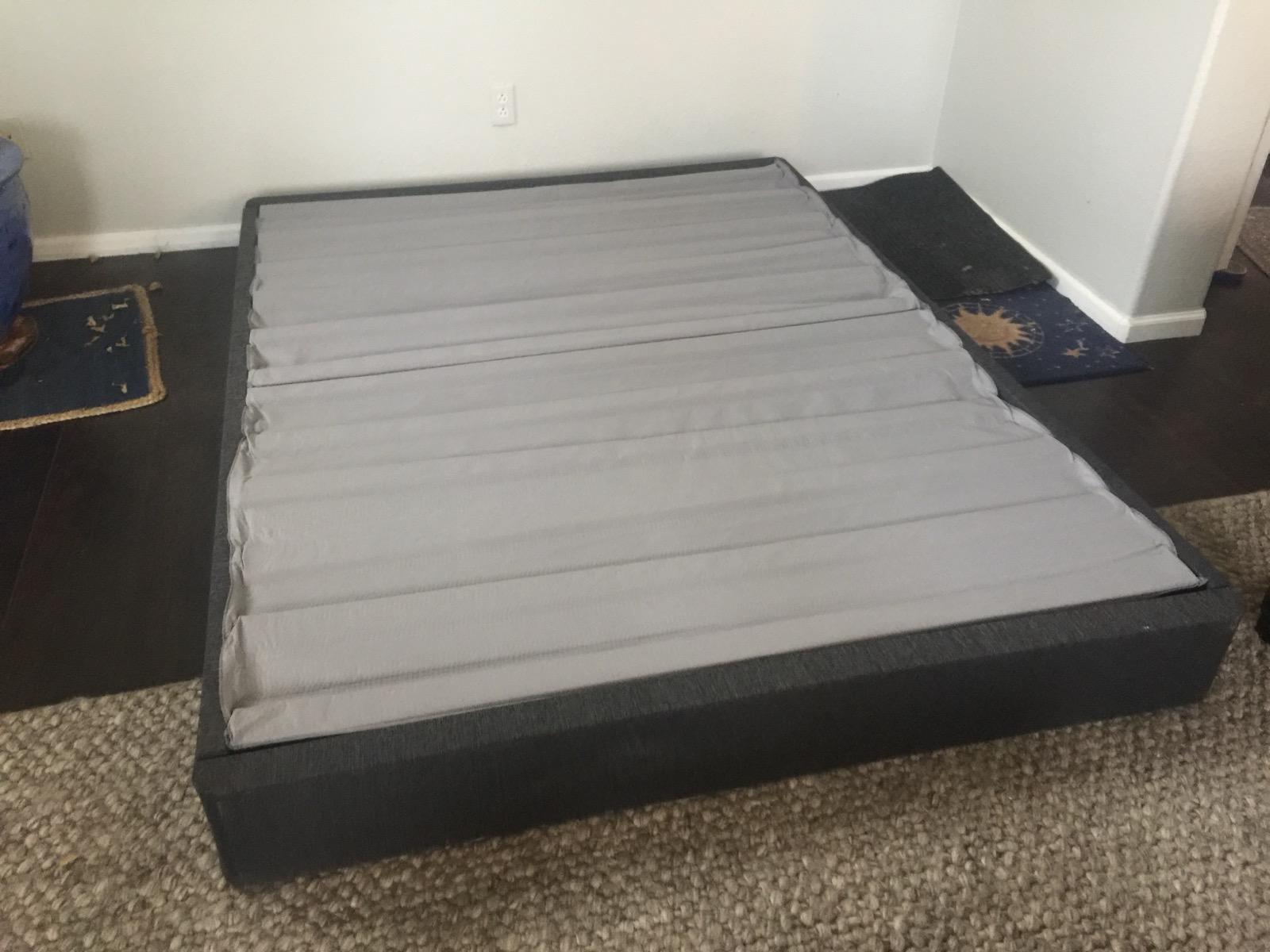
Breaking down a box spring at our facility — you can see exactly what materials were used in construction.
Finish Matters as Much as the Wood
A solid hardwood frame coated in solvent-based lacquer or polyurethane stain can off-gas VOCs (volatile organic compounds) for months. This is where a lot of people get tripped up — they buy a "solid wood" frame thinking it's clean, but the finish is loaded with chemicals.
Here's the hierarchy of bed frame finishes from cleanest to most concerning:
- Natural oils (linseed, tung, hemp oil) — Non-toxic, zero VOC, penetrate the wood grain. These are the gold standard for non-toxic frames. Tung oil is the most durable and doesn't yellow over time. Linseed oil is the most common — look for raw or polymerized versions (avoid "boiled linseed oil" unless it's labeled polymerized, since traditional boiled versions contain metallic drying agents). Hemp oil has the mildest odor for anyone with chemical sensitivity.
- Zero-VOC water-based stains — Brands like ECOS (used by Avocado) and Vermont Natural Coatings' PolyWhey are legitimate zero-VOC options. They provide color and protection without the toxic solvents found in conventional stains.
- Shellac — A natural resin from lac beetles, dissolved in alcohol. Non-toxic once cured. Not as durable as other finishes but easy to repair. Some manufacturers use it as a sealer under other finishes.
- Water-based polyurethane — Better than oil-based, but still contains glycol ethers (reproductive toxins per building science research). Safe once fully cured in about two weeks. A reasonable middle ground if natural oils aren't available.
- Oil-based polyurethane and lacquer — High VOC content. Off-gasses intensely for weeks. Conventional lacquers use toxic solvents like toluene and xylene. This is what most budget bed frames ship with, and it's what I smell when I break them down at my facility years later.
Glues and Adhesives
Even solid wood frames use glue at joints. The safest options are PVA wood glues like Titebond (the Original tests formaldehyde-free, Titebond III measures just 50 parts per billion) and soy-based adhesives like Columbia Forest Products' PureBond. Urea-formaldehyde glue — the standard in MDF and particleboard — is what you're trying to avoid.
Metal Frames Are Inherently Non-Toxic
Powder-coated steel and iron frames don't off-gas once the coating is cured. The powder coating creates a chemically inert barrier — no VOCs, no flaking, no chipping. Chrome and brushed metal finishes are similarly safe. If you're highly chemical-sensitive and want the simplest path to a clean bedroom, a powder-coated metal frame is your safest bet.
What It Takes to Make This List
I'm not just looking at marketing claims. I've been in the mattress and bed frame industry for over 20 years — first at my father's mattress factory, now running the largest mattress recycling operation in the country. I know what materials hold up and which ones are marketing theater.
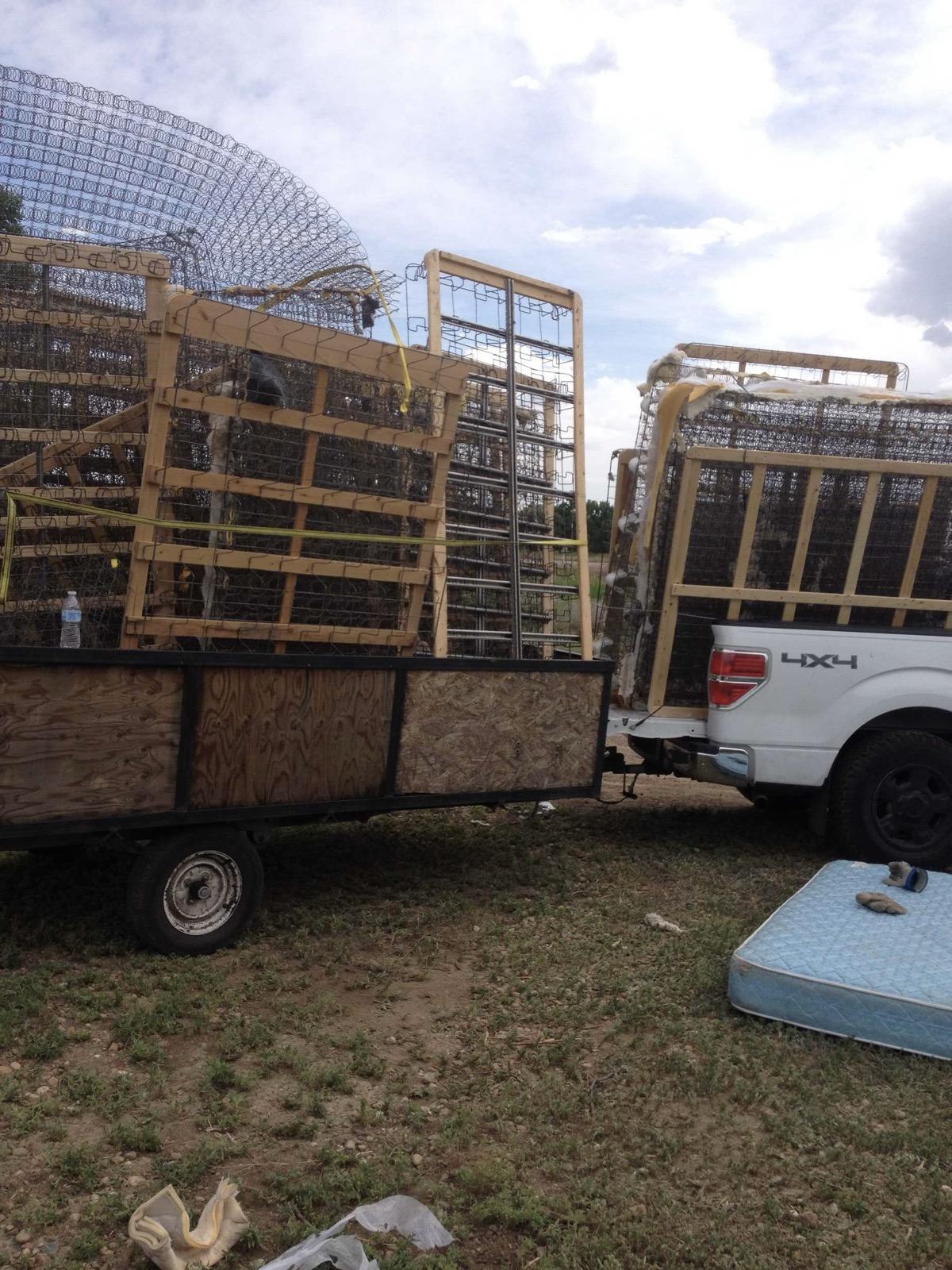
Old bed frames and box springs at our recycling facility — after 20+ years, I've seen what holds up and what falls apart.
No MDF, Particleboard, or Composite Wood
If the frame contains engineered wood anywhere — headboard panels, slat supports, drawer bottoms — it doesn't make this list. Period. Some brands use formaldehyde-free plywood (bonded with soy-based or MDI adhesive) for structural reinforcement, and I'll note that where it applies. But no urea-formaldehyde bonded materials.
Clean Finish — Natural Oil, Zero-VOC, or Powder Coat
The finish must be natural oil (tung, linseed, hemp), zero-VOC water-based, or powder-coated metal. I'll specify exactly what each brand uses. If a company won't tell you what's in their finish, that's a red flag.
Non-Toxic Adhesives
PVA wood glue, soy-based adhesive, or MDI. No urea-formaldehyde. Titebond and similar non-toxic wood glues are the standard I look for.
Third-Party Verification
I prioritize frames with GREENGUARD Gold certification (the strongest emissions standard), eco-INSTITUT certification (European emissions testing), or UL Formaldehyde-Free verification. FSC certification is nice for sustainability but tells you nothing about toxicity — I'll explain the difference below.
Transparent Manufacturing
The best brands tell you exactly what wood species, what finish brand, what glue, and where it's made. Vague descriptions like "eco-friendly finish" or "natural materials" without specifics are marketing, not transparency.

Note: The "My take" sections below are my opinions based on my extensive knowledge of bed frame construction, materials science, and what I see come through my recycling facility. I'll tell you where each frame excels and where it falls short.
Non-Toxic Bed Frames I Recommend
I can't cover every non-toxic bed frame on the market. These are the ones I've evaluated based on my experience with bed frame construction and materials — I know which combinations of wood, finish, and joinery hold up long-term and which ones don't.
1. Luca Bed
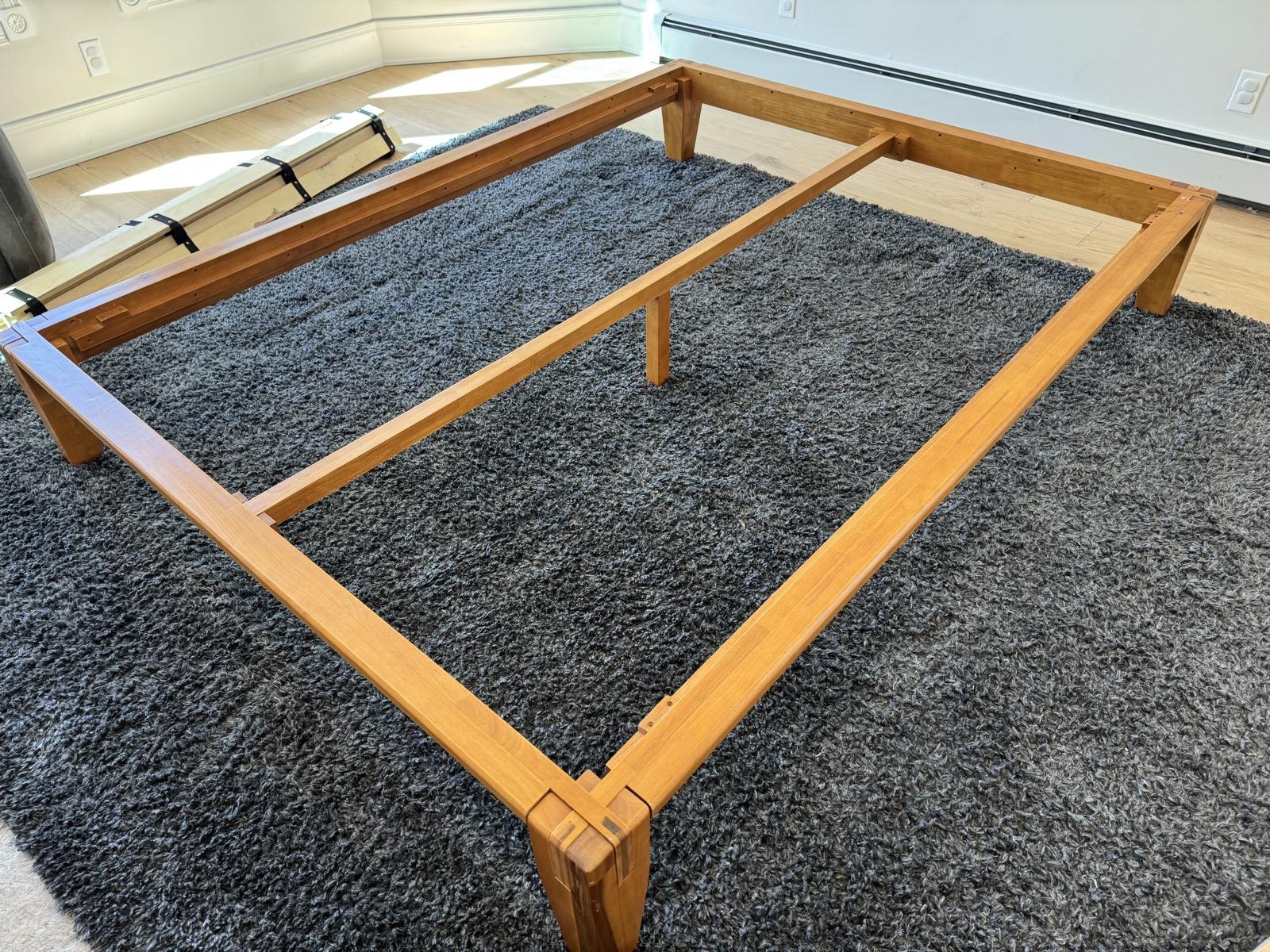
| Materials | Solid rubberwood (teak and walnut are finish colors, not wood species) |
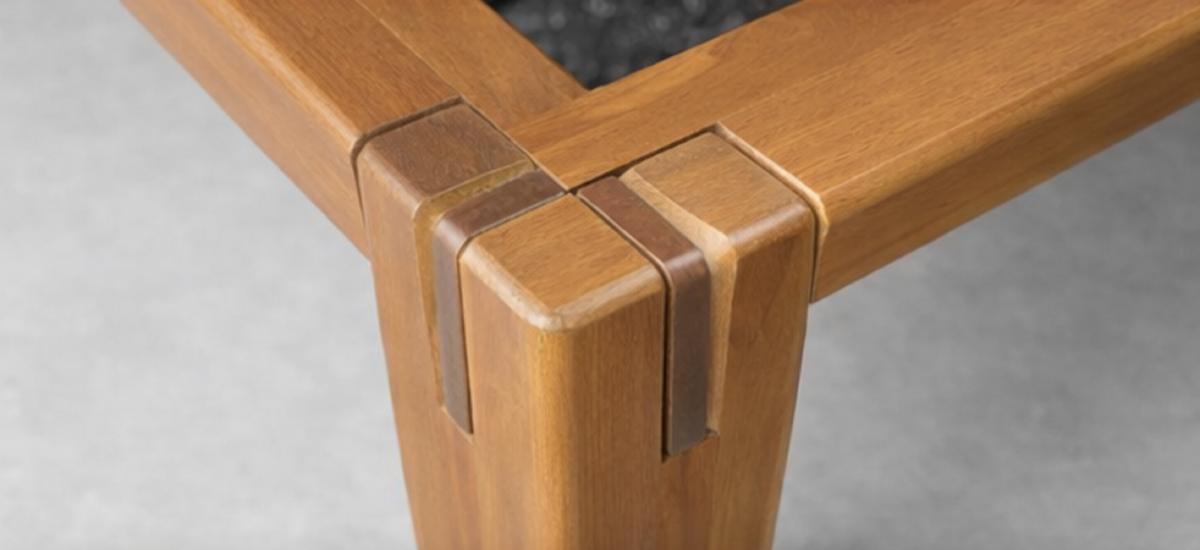
| Construction | Japanese joinery — no tools, screws, or hardware |
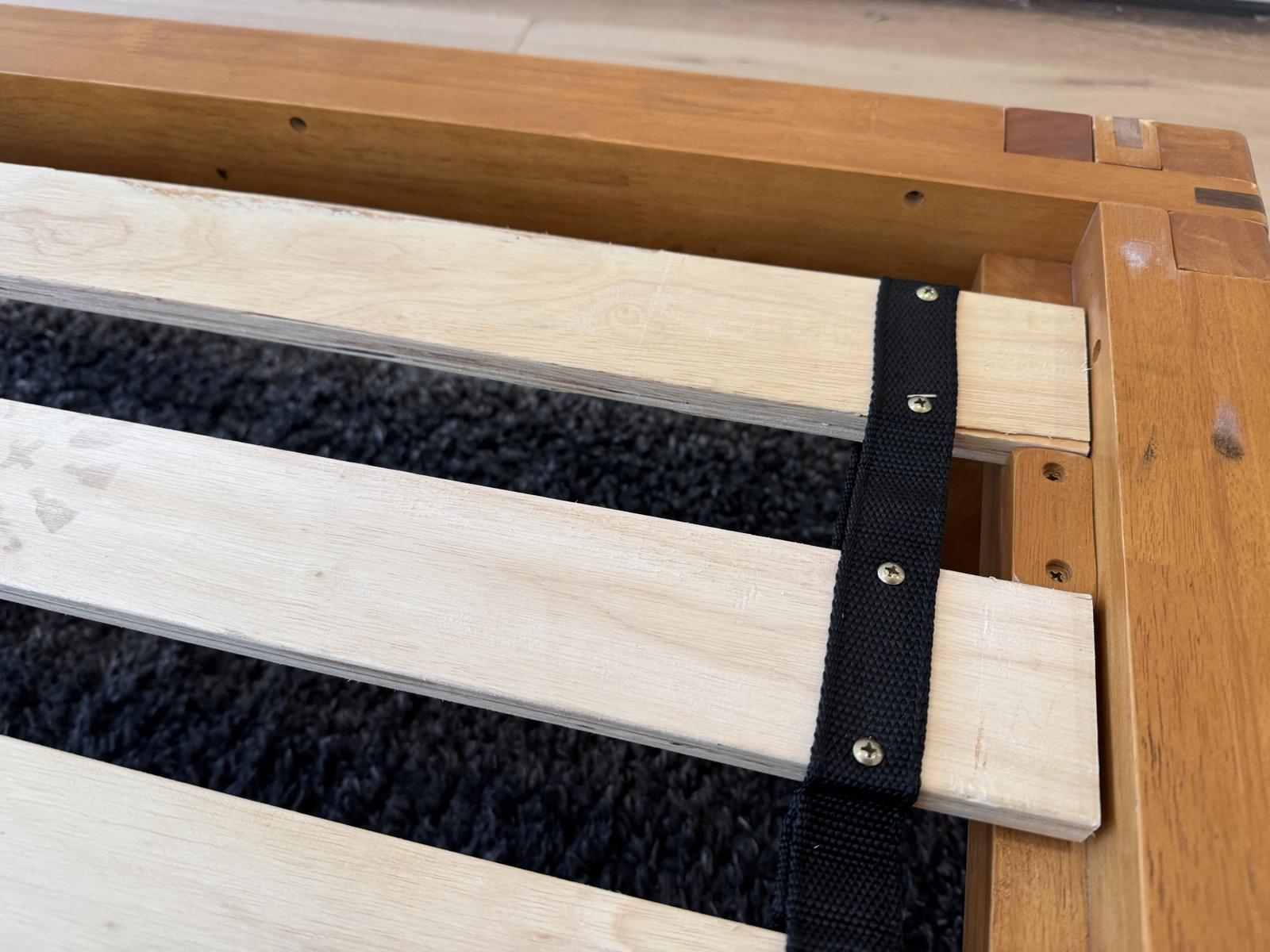
| Slat System | Solid wood slats spaced ~2.5" apart with center support |
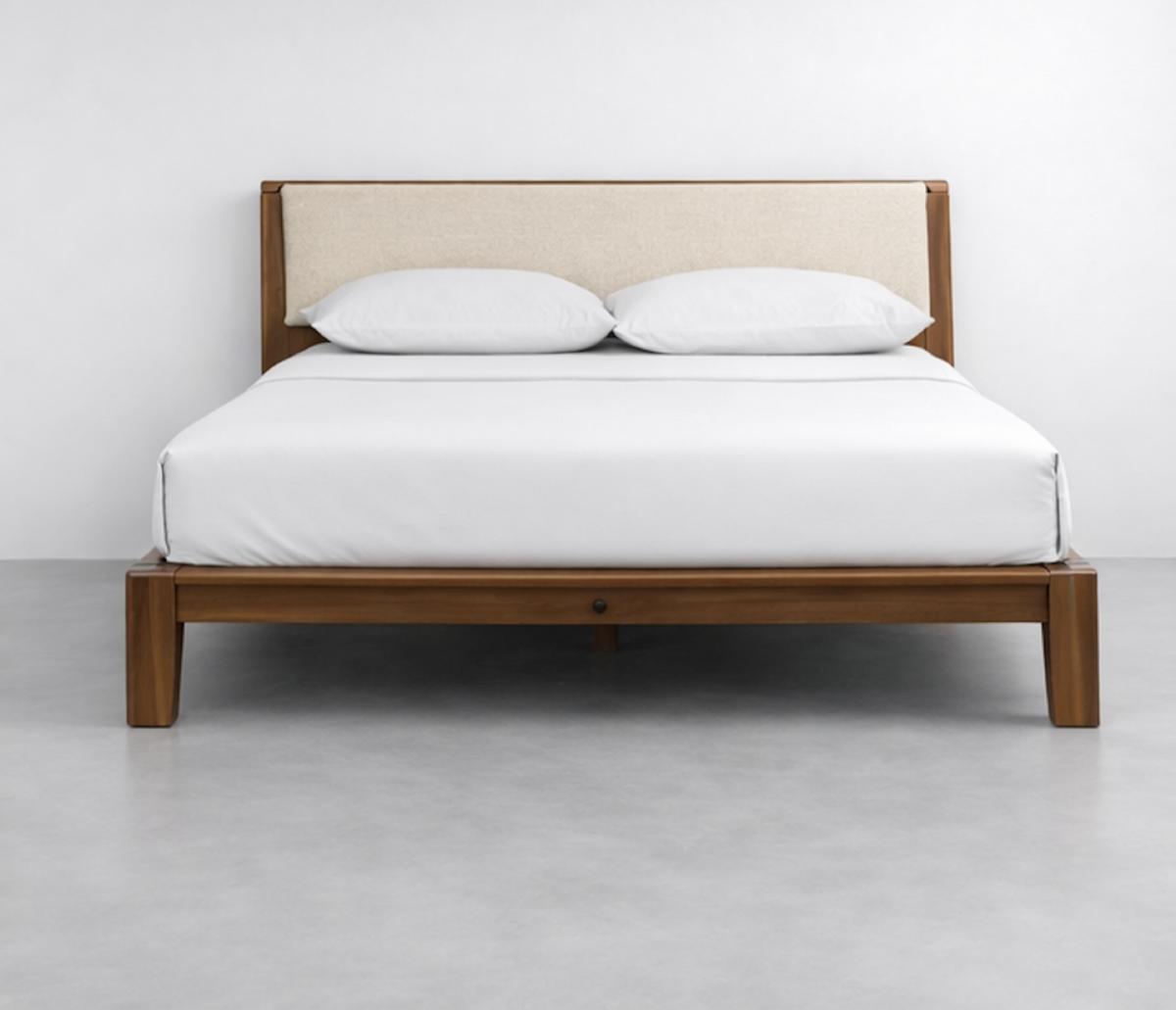
| Headboard | Optional upholstered headboard (cream or grey) |
| Weight Capacity | 900 lbs |
| Clearance | 9" floor clearance / 13" floor to slats |
| Price (Queen) | From $995 platform / $1,797 w/ headboard |
| Finish | Teak, walnut, or grey stain (finish type not disclosed) |
| Made In | Vietnam |
| Certifications | None listed |
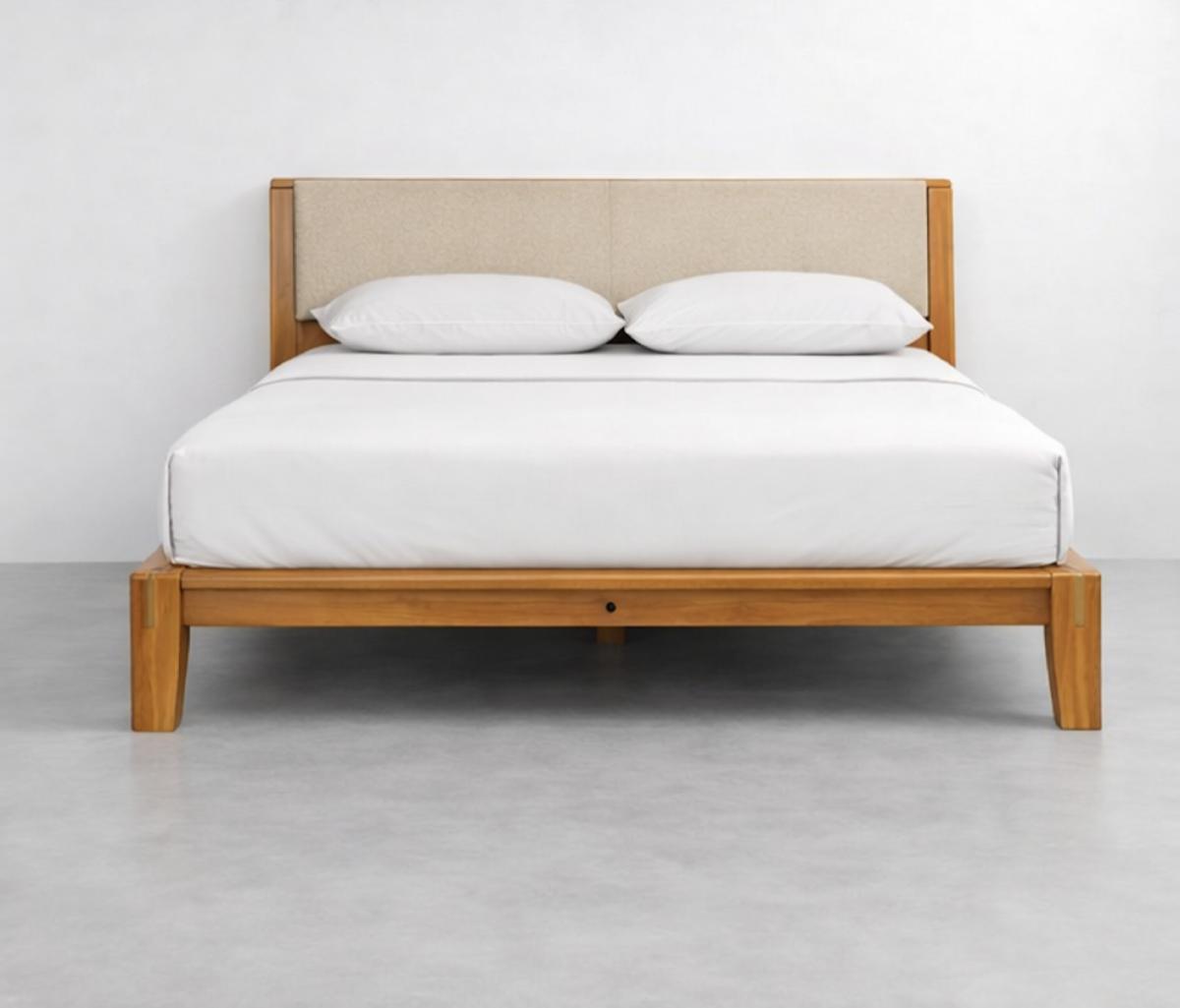
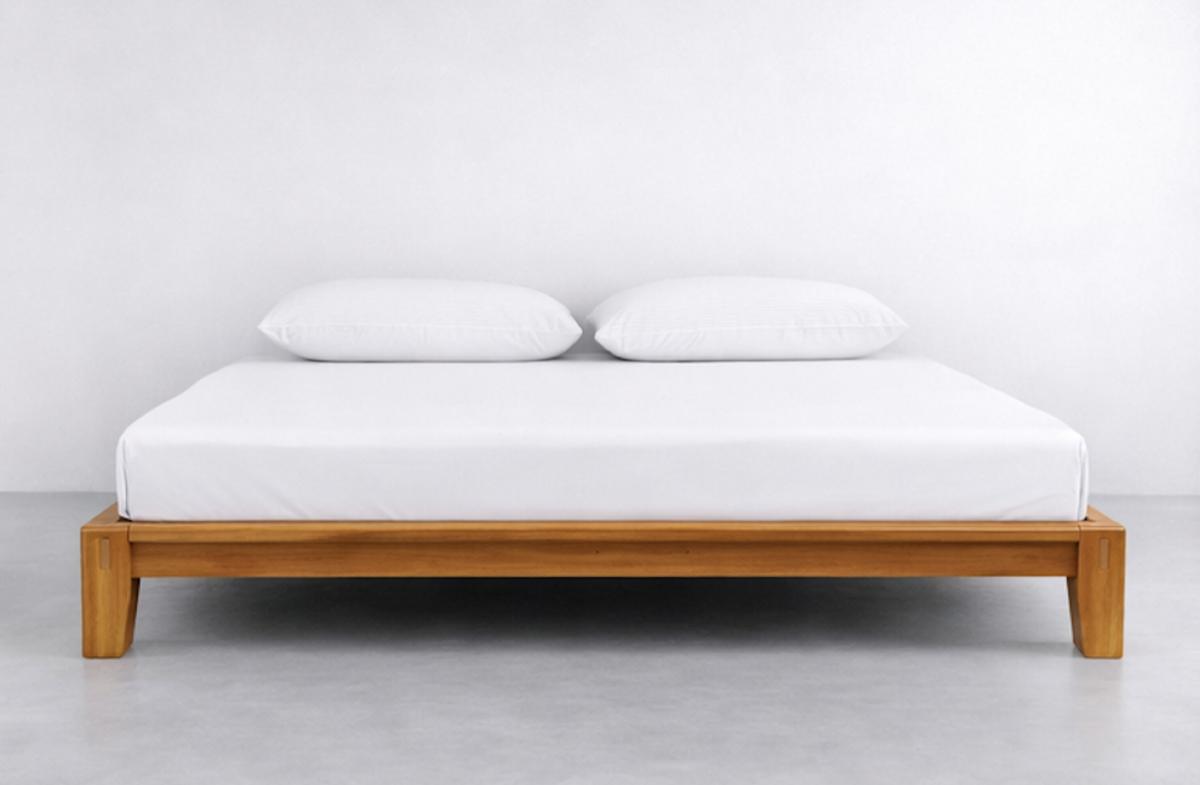
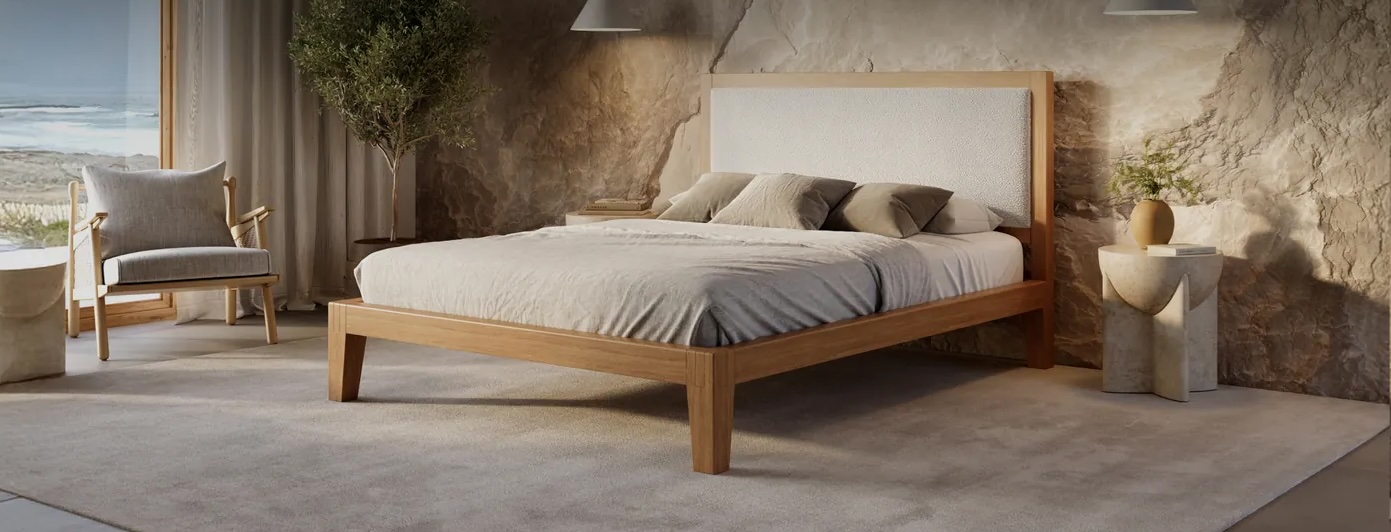
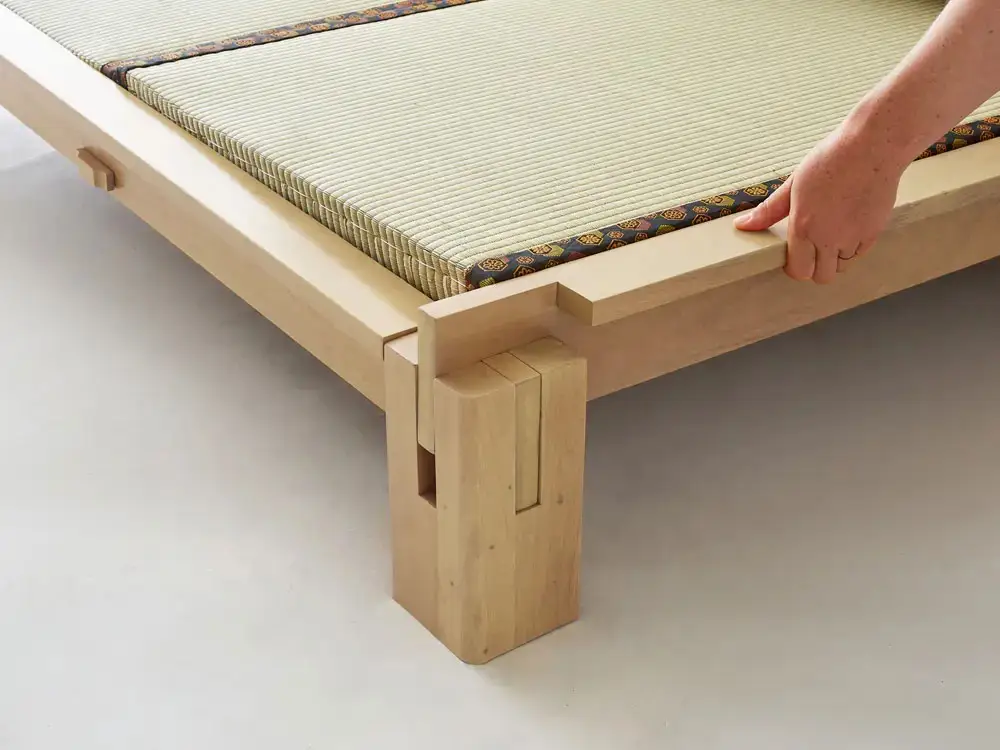
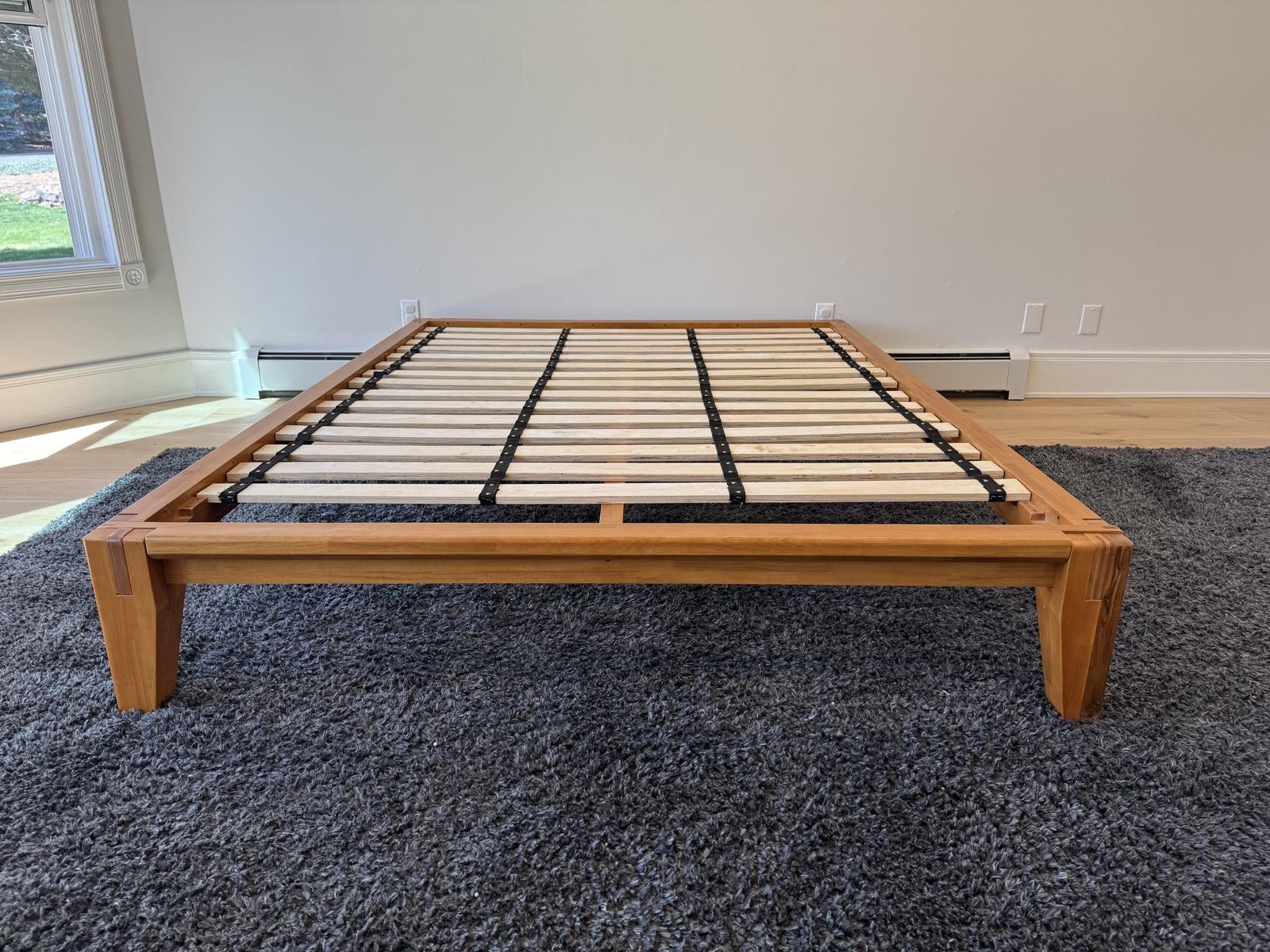
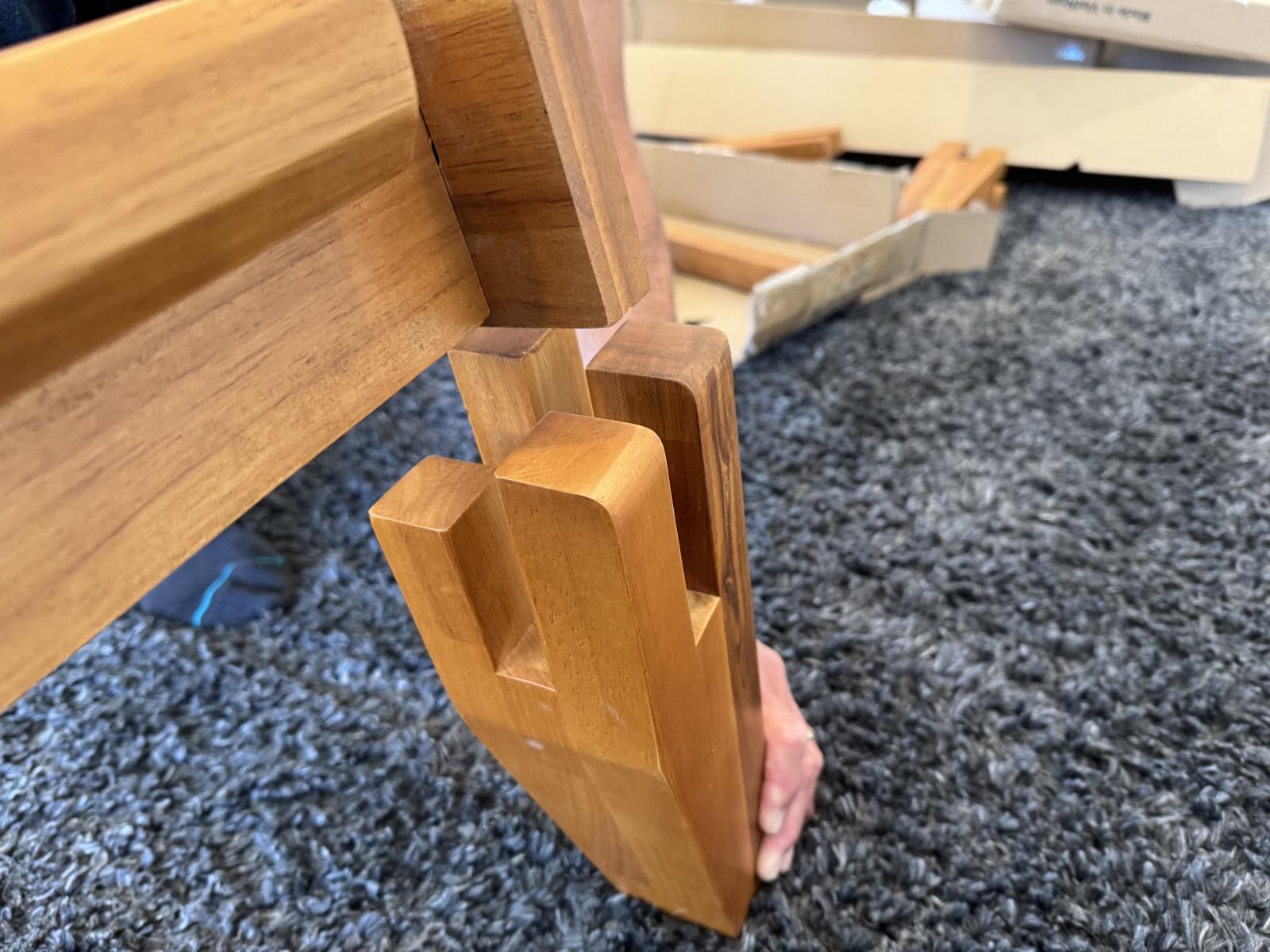
Solid rubberwood construction with Japanese joinery — interlocking wood pieces that create strong joints without metal hardware, tools, or screws. Important clarification: the "teak" and "walnut" options on Luca's website are finish colors, not wood species. The actual wood is rubberwood (Hevea brasiliensis) throughout. The slat system uses solid wood slats spaced approximately 2.5 inches apart with a proper center support beam, rated for 900 lbs total weight capacity.
Non-toxic assessment: Rubberwood is a sustainable hardwood — it comes from rubber trees (Hevea brasiliensis) that have completed their 25-30 year latex-producing lifespan and would otherwise be burned or discarded. It's a legitimate hardwood with a Janka hardness of 960 (harder than poplar, softer than oak). The Japanese joinery construction means fewer adhesive points compared to bolt-on frames. The beds are manufactured in Vietnam. Luca is a small company and does not carry third-party certifications like GREENGUARD Gold or FSC. They don't publicly disclose their specific finish type or adhesive brand on their website, and their "teak" and "walnut" labels refer to finish colors, not wood species — the actual wood is rubberwood throughout.
Who it's for: Anyone who wants a solid hardwood bed with real Japanese joinery and a 900 lb weight capacity, and is comfortable with a brand that doesn't publish detailed material disclosures.
My take: I've personally tested this bed and visited Luca's warehouse. The Japanese joinery is the real deal — interlocking wood joints that get tighter over time instead of loosening like bolt-on connections. The slats are spaced about 2.5 inches apart with a proper center support beam, which means better mattress support and no risk of slat failure under load. The 900 lb weight capacity is solid. Construction quality is genuinely excellent.
Luca is a small company, so they don't have the GREENGUARD Gold or FSC certifications that larger brands like Avocado carry — those certifications cost real money to obtain and maintain. What I can tell you from firsthand inspection: the finishes are clean, I found no off-gassing, and the solid rubberwood construction is miles ahead of the particleboard and MDF frames I see come through my recycling facility every day. Rubberwood is a sustainable, durable hardwood — there's nothing wrong with it. I do wish they'd be more upfront about the wood species on their website instead of labeling the finishes "teak" and "walnut," which can be misleading. If you need full transparency on finish chemistry and third-party certifications, go with Avocado. But this is a high-quality frame with solid hardwood construction that I'd feel comfortable sleeping on — and I like supporting small companies doing things the right way.
2. Avocado City Bed
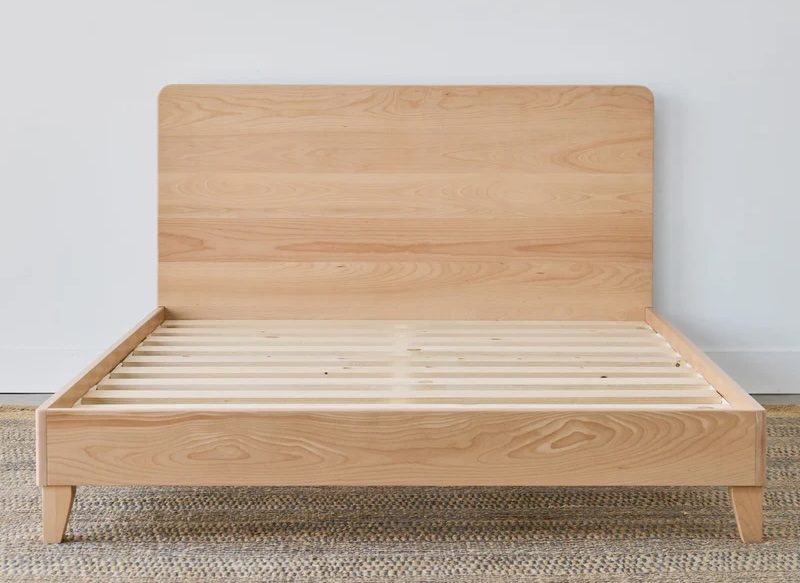
| Materials | FSC-certified North American beech, alder, or solid American walnut |
| Finish | Zero-VOC ECOS clear varnish (CDPH 01350 compliant) |
| Glue | Titebond wood glues (food-contact safe) |
| Certifications | GREENGUARD Gold, FSC, UL Formaldehyde-Free |
| Assembly | Tool-free — patent-pending finger joints |
| Made In | Los Angeles, CA (some models in Tecate, Mexico FSC-certified facility) |
| Price (Queen) | ~$699 frame only / ~$1,155–$1,443 with headboard |
| Warranty | 10 years |
| Trial | 120 nights |
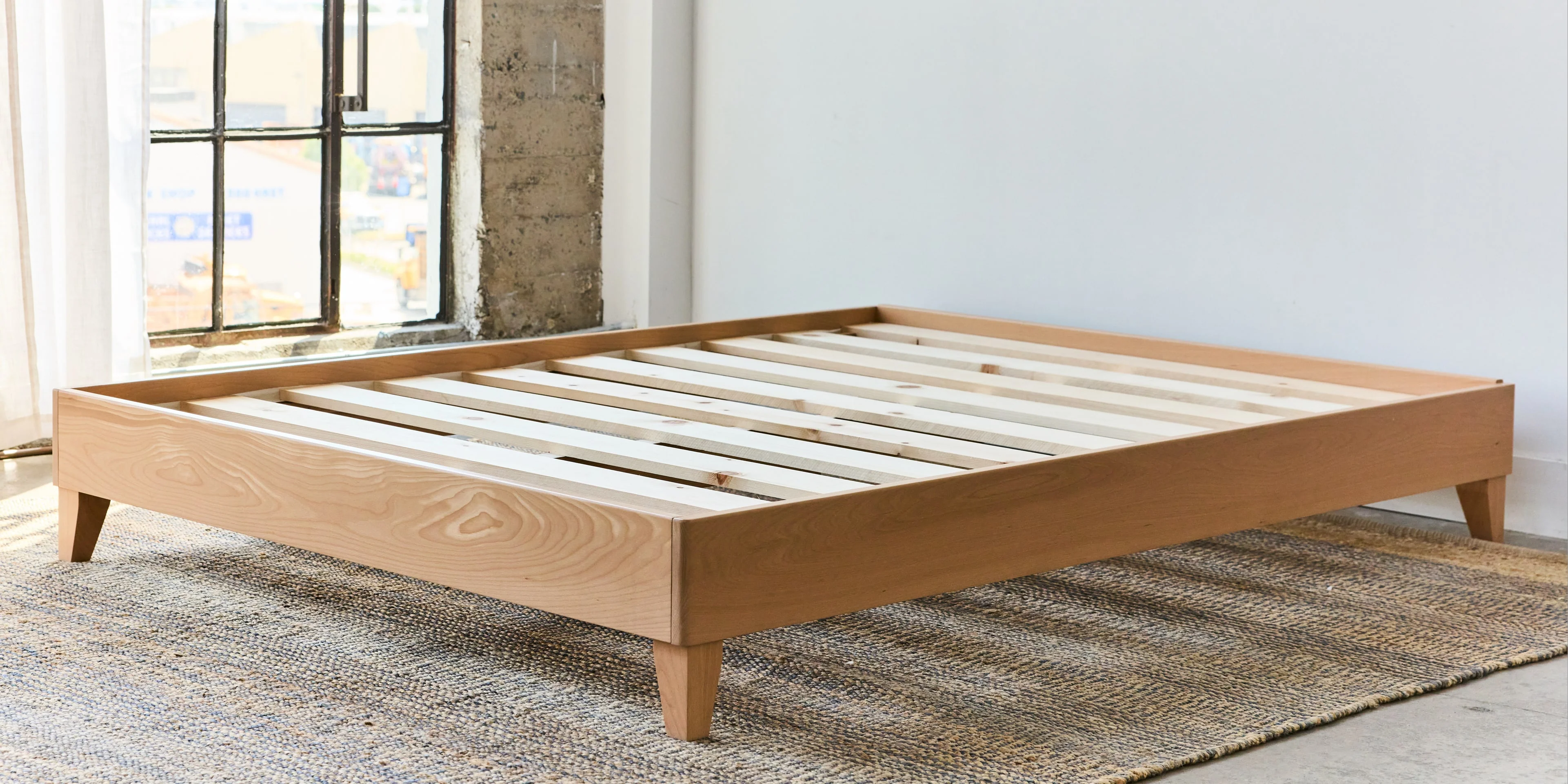
Avocado discloses everything — finish brand (ECOS zero-VOC), glue type (Titebond, food-contact safe), certification numbers (GREENGUARD Gold, FSC, UL Formaldehyde-Free). No MDF, particleboard, or veneers anywhere. The frame uses organic cotton ribbing between slats and rails to prevent squeaking. Tool-free assembly with patent-pending finger joints means no metal hardware at connection points.
Non-toxic assessment: This is the gold standard for documented non-toxic credentials. ECOS paint and varnish is one of the cleanest finish lines on the market — zero VOC, CDPH 01350 compliant (California's strictest indoor air quality standard). Titebond wood glues are formaldehyde-free and food-contact safe. GREENGUARD Gold certification means total VOC emissions tested below 220 μg/m³ with formaldehyde below 7.3 ppb — verified annually by UL. Add UL Formaldehyde-Free verification on top, and you have the most thoroughly documented non-toxic bed frame available.
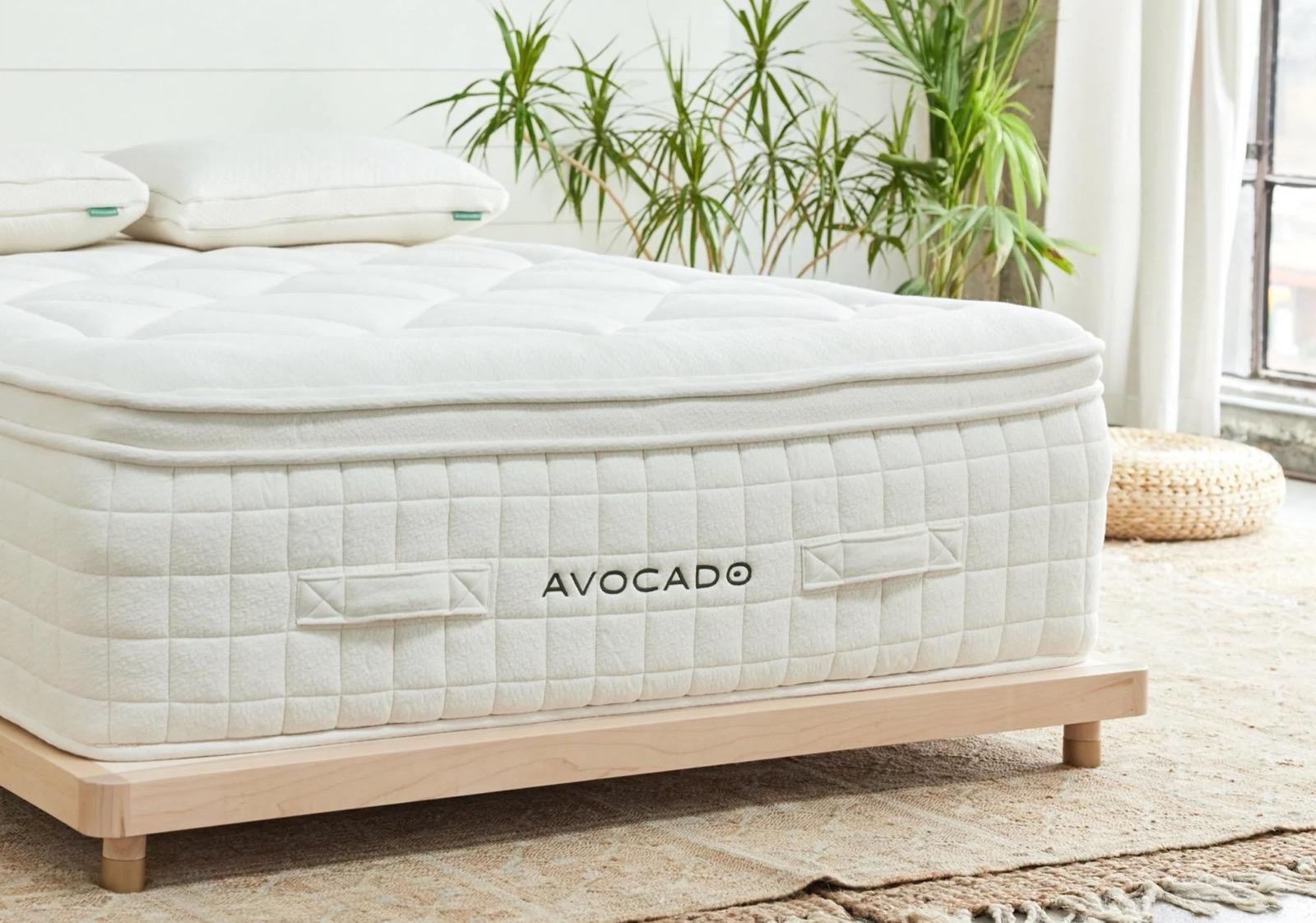
Who it's for: Anyone who wants the most transparent, well-documented non-toxic bed frame available. Also great if you want to match with an Avocado organic mattress for a fully certified sleep system.
My take: Avocado sets the standard for material transparency in the bed frame industry. When I evaluate a bed frame, the first thing I look for is whether the company will tell me exactly what's in it. Avocado tells you the finish brand (ECOS), the glue brand (Titebond), and backs it up with GREENGUARD Gold certification — that's rare. No other brand on this list provides that level of disclosure. The finger-joint assembly also means fewer stress points that can develop play over time — something I see constantly with bolt-on frames at my facility.
The price is reasonable for what you're getting — $699 for the frame is competitive given the certifications alone cost money to obtain and maintain annually. My only note: some City Bed models are manufactured in Tecate, Mexico, not LA. The facility is FSC-certified, but if domestic manufacturing matters to you, confirm before ordering.
3. Floyd
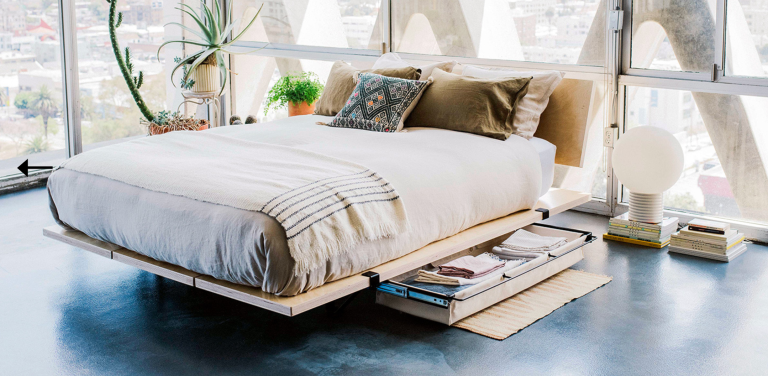
| Materials | Birch plywood panels with honeycomb core; walnut or white oak veneer options |
| Finish | UV-sealed clear coat (specific chemistry not disclosed) |
| Construction | Powder-coated steel brackets + nylon ratchet straps |
| Emissions | TSCA Title VI certified, CARB Phase 2 compliant |
| Assembly | Tool-free — ratchet straps cinch panels together |
| Made In | USA (plywood from Virginia, designed in Detroit) |
| Price (Queen) | ~$1,095–$1,145 frame / ~$1,400–$1,690 w/ headboard |
| Weight Capacity | 750 lbs (Queen) |
| Warranty | 10 years |
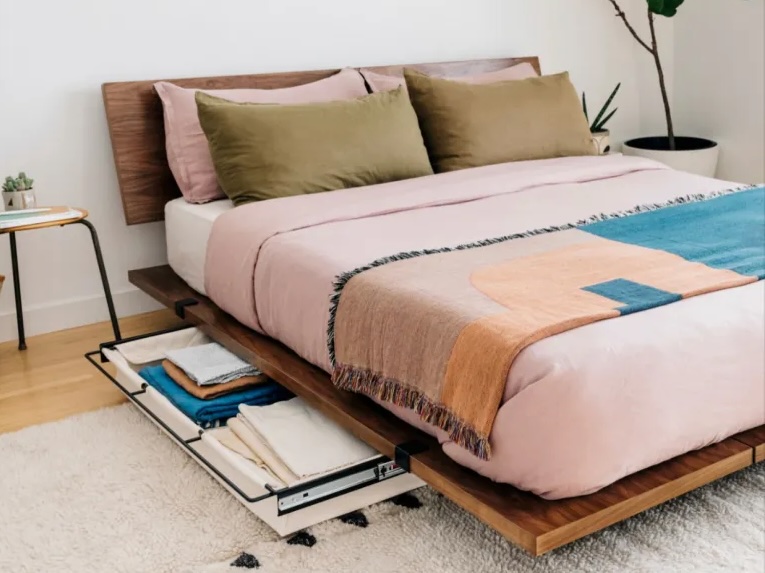
An important clarification: Floyd is not a solid wood bed frame. The panels are birch plywood with a lightweight honeycomb core, available with walnut or white oak veneer. Floyd is upfront about this — they distinguish their plywood from MDF and call it "more reliably constructed." The panels are held together with powder-coated steel brackets and nylon ratchet straps. Tool-free assembly, so it comes apart easily when you move.
Non-toxic assessment: The birch plywood panels are TSCA Title VI certified and CARB Phase 2 compliant for low formaldehyde emissions — this is the federal legal standard, not a voluntary certification. Floyd does not carry GREENGUARD Gold, which tests at approximately 7x stricter formaldehyde limits. The UV-sealed clear coat finish chemistry is not disclosed. The powder-coated steel brackets are chemically inert once cured — no off-gassing concerns. No MDF or particleboard is used. Made in the USA with plywood manufactured in Virginia.
Who it's for: People who move frequently and want something that comes apart without tools. Best for buyers who prioritize American manufacturing and practical modular design over solid hardwood construction.
My take: I want to be upfront — Floyd uses engineered plywood panels, not solid wood. That doesn't automatically make it toxic. Birch plywood with a honeycomb core is structurally different from MDF or particleboard — it uses far less adhesive and doesn't contain the compressed wood fiber that makes MDF such a heavy formaldehyde emitter. The TSCA Title VI certification confirms the panels meet the federal standard for low formaldehyde, though that's the legal minimum — GREENGUARD Gold requires formaldehyde levels approximately 7x lower, and Floyd doesn't have that.
The powder-coated steel brackets are legitimately non-toxic — powder coating is chemically inert once cured. Made in the USA with plywood from Virginia. Weight capacity is 750 lbs, which is adequate for most couples but lower than the 900-1,500 lb capacities on other frames in this list. If you want solid wood, look at the other options here. If you want a practical, modular frame with decent emissions credentials and American manufacturing, Floyd is worth considering.
4. Avocado Malibu
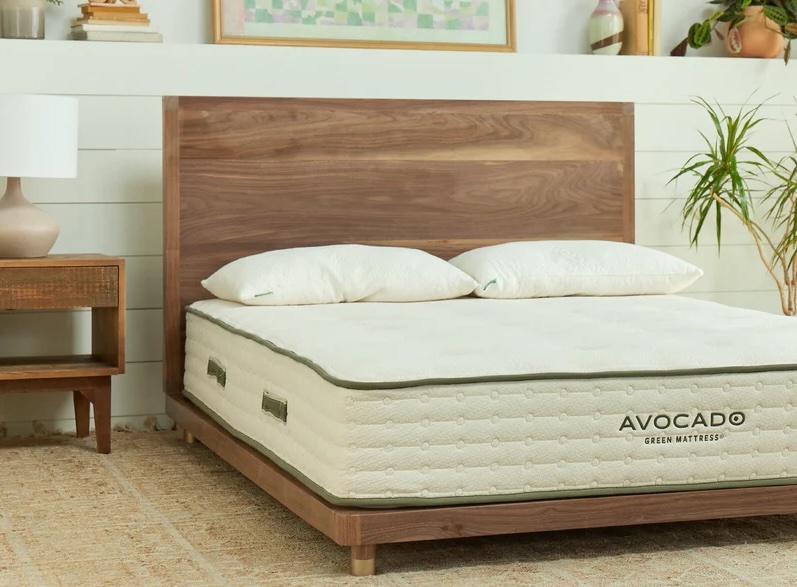
| Materials | FSC-certified solid maple |
| Finish | Zero-VOC ECOS (same as City Bed) |
| Certifications | GREENGUARD Gold, FSC |
| Made In | California, USA |
| Price (Queen) | ~$1,399 |
| Weight Capacity | 1,000+ lbs |
| Warranty | 10 years |
Made in California from FSC-certified North American hardwoods. Solid maple construction with a minimalist design. No particleboard, no MDF, no plywood. Same zero-VOC ECOS finish and Titebond glues as the City Bed.
Non-toxic assessment: Same excellent material transparency as the City Bed — ECOS zero-VOC finish, Titebond adhesives, GREENGUARD Gold certification. Solid maple is one of the hardest domestic hardwoods at 1,450 Janka, and it's used throughout the frame with no engineered wood filler panels. The 1,000+ lb weight capacity tells you the joints are solid. California-made with full chain-of-custody documentation on the wood sourcing.
Who it's for: Anyone who wants premium solid hardwood with the same material transparency Avocado is known for. Maple is one of the hardest domestic hardwoods, making this a good choice if you want maximum surface durability.
My take: Avocado doesn't cut corners on materials — this is real solid hardwood, start to finish. Maple is harder than oak (1,450 Janka hardness vs. 1,360 for oak), which means it handles stress without denting or wearing. Same ECOS zero-VOC finish, same Titebond glues, same GREENGUARD Gold certification as their City Bed. If you're choosing between the City and the Malibu, the difference is aesthetics and wood species — both are equally clean from a non-toxic standpoint. The Malibu's maple will show fewer wear marks over the years than softer woods like poplar or pine.
5. Luca Platform Bed
| Materials | Solid rubberwood (teak and walnut are finish colors) |
| Construction | Japanese joinery — no tools, screws, or hardware |
| Slat System | Solid wood slats spaced ~2.5" apart with center support |
| Weight Capacity | 900 lbs |
| Price (Queen) | From $995 |
| Finish | Teak, walnut, or grey stain (finish type not disclosed) |
| Certifications | None listed |
The platform-only version of the Luca Bed — same solid rubberwood construction and Japanese joinery, without the headboard. Same solid wood slat system spaced approximately 2.5 inches apart with proper center support, rated for 900 lbs. Same finish options: teak, walnut, or grey (these are stain colors, not wood species).
Non-toxic assessment: Same material profile as the full Luca Bed — solid rubberwood with Japanese joinery means fewer adhesive points. Rubberwood is a sustainable hardwood that doesn't require chemical treatments. Same transparency limitations: no finish type, adhesive, certification, or manufacturing disclosures on the website.
Who it's for: Anyone who wants the Luca Bed construction quality in a platform-only design — either for a minimalist aesthetic or to pair with a wall-mounted headboard. At $995, it's the more accessible entry point to the Luca lineup.
My take: Same excellent construction as the full Luca Bed — real Japanese joinery, solid rubberwood throughout, slats spaced about 2.5 inches apart, and proper center support. At $995, it's significantly less than the $1,797 headboard version and gets you the same frame quality. The slat system is the standout — most platform beds at any price use thin, widely-spaced slats that lead to premature mattress wear. Same clean finishes and solid construction I experienced firsthand when I visited their warehouse. If you want the Luca build quality without the headboard, this is a smart way to save $800. Same note applies: if you need documented certifications and full finish transparency, Avocado is the safer bet on paper. But I'd sleep on this frame without hesitation.
6. Puffy Capri
| Materials | 100% solid European oak frame, Argentinian pine slats |
| Finish | Not disclosed by manufacturer |
| Construction | Japanese Kumiki joinery — no metal hardware |
| Certifications | None listed for the bed frame |
| Slat Design | Argentinian pine slats with velvet-padded rails for noise reduction |
| Price (Queen) | ~$1,495 frame only / ~$1,399 w/ headboard (sale pricing) |
| Weight Capacity | Not disclosed |
| Manufacturing | Not disclosed |
| Warranty | Limited Lifetime |
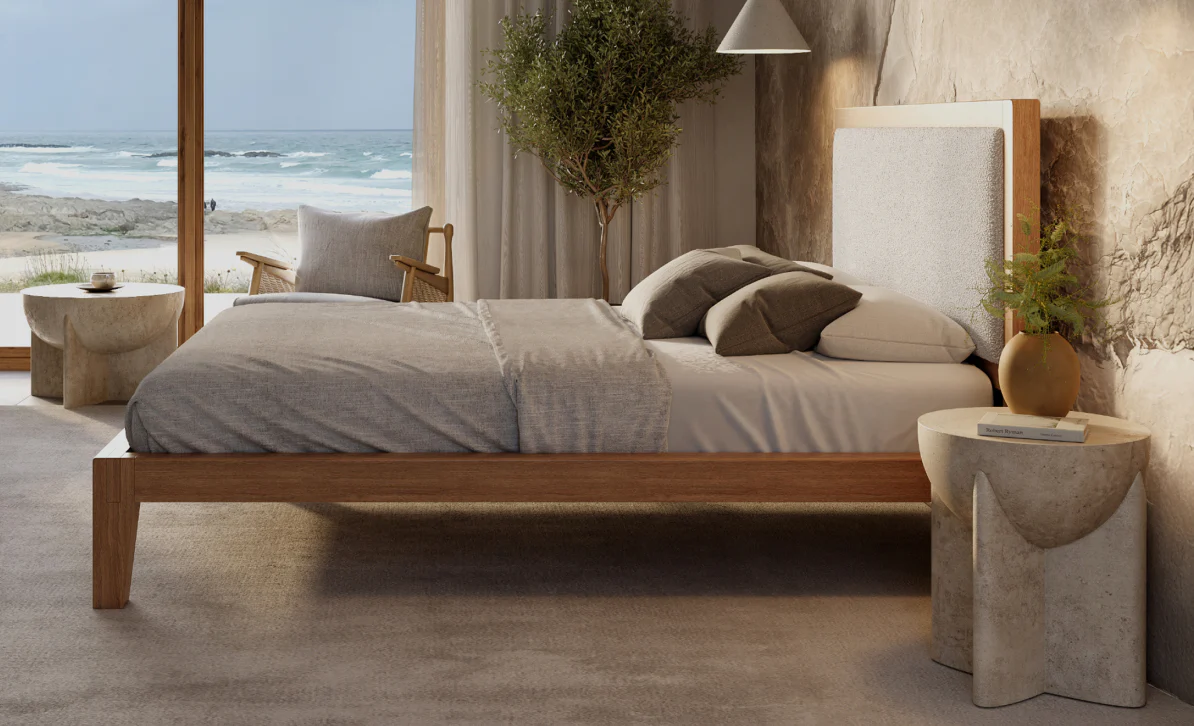
100% solid European oak frame with Japanese Kumiki joinery — no metal hardware at all. The slats are Argentinian pine (not oak), with velvet-padded rails where the slats sit to minimize noise.
Non-toxic assessment: Solid oak construction is inherently good from a toxicity standpoint — no engineered wood, no formaldehyde-emitting adhesives in the frame structure. However, Puffy has significant transparency gaps. They don't disclose what finish or stain is used on the wood (water-based? solvent-based? lacquer?), what adhesives are involved, or where the frame is manufactured. The Capri carries zero third-party certifications for the bed frame — no GREENGUARD Gold, no FSC, nothing. Puffy's CertiPUR-US certification applies to their mattress foam only, not the bed frame. The velvet-padded rails also have undisclosed material composition.
Who it's for: Anyone who wants heirloom-quality solid oak with Japanese joinery and a lifetime warranty, and who trusts the solid wood construction to be low-risk even without detailed finish disclosures.
My take: The construction is excellent — solid European oak with Japanese joinery is about as durable as a bed frame gets. Oak at 1,360 Janka hardness is extremely tough, and hardware-free joinery eliminates the metal-on-wood friction that causes most bed frame squeaking. The lifetime warranty shows Puffy stands behind the build quality.
But here's my concern from a non-toxic standpoint: Puffy doesn't tell you what's on the wood. What stain? What topcoat? Water-based or solvent-based? They don't say. They also don't disclose where it's manufactured, what the velvet padding is made of, or whether any flame retardants are used in the upholstered headboard. For a frame priced at $1,495, the lack of material transparency is disappointing compared to Avocado, which tells you the exact finish brand, the exact glue brand, and backs it up with GREENGUARD Gold — at a lower price point. If finish transparency matters to you, Avocado is the better documented choice. If you trust solid oak construction and want the best joinery, the Capri delivers on build quality.
7. Tatami Bed by The Futon Shop
| Materials | FSC-certified solid poplar hardwood |
| Finish | Water-based, low-VOC stain (4 color options) |
| Adhesives | No formaldehyde-emitting glues |
| Certifications | FSC Forest Management Certified |
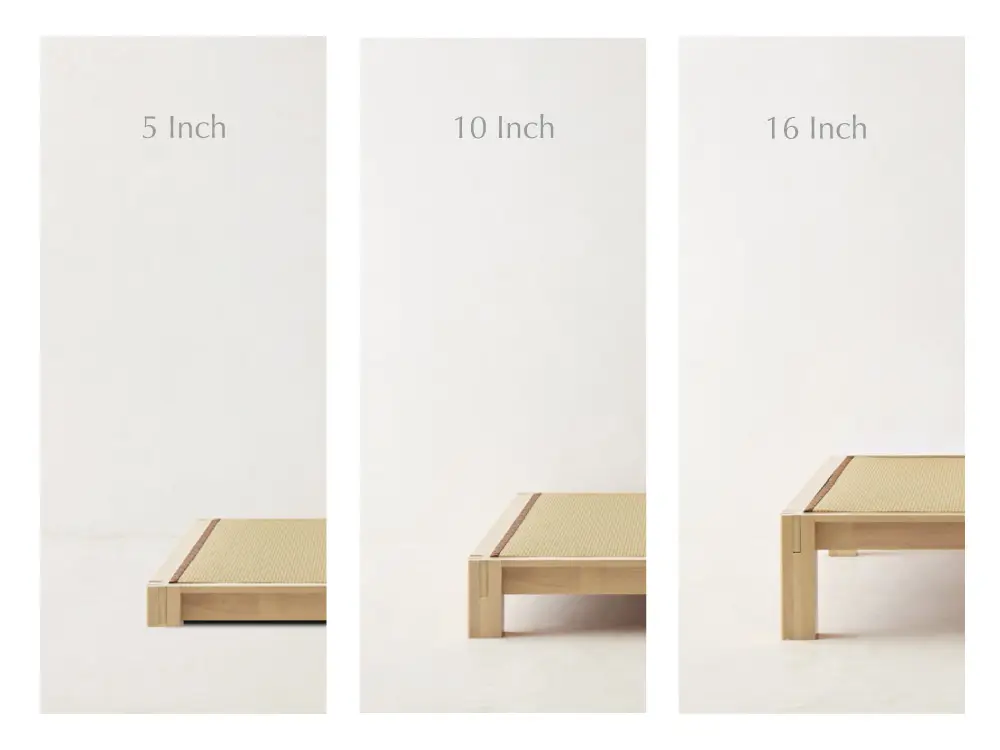
| Height Options | 5", 10", or 16" leg heights |
| Slats | Wood slats, 2.5" wide with ~3" spacing |
| Made In | North America |
| Price (Queen) | ~$730–$900 |
| Warranty | 5 years (hardwood frame) |
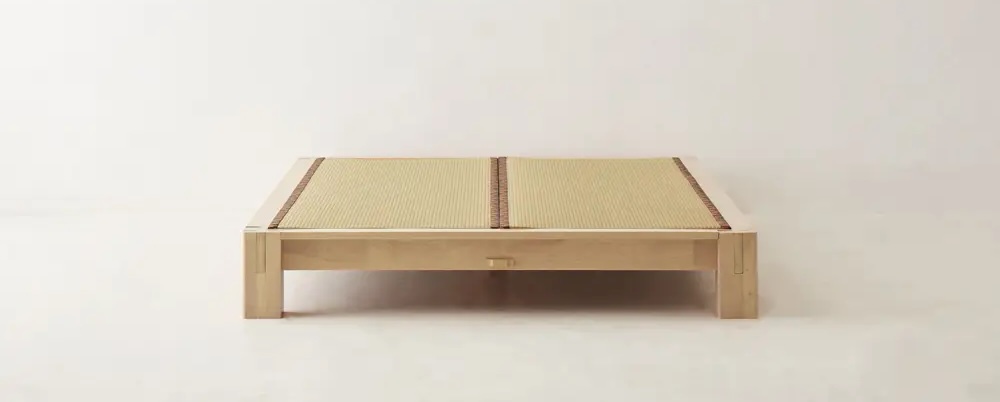
A traditional Japanese-inspired platform bed made from FSC-certified solid poplar hardwood with a water-based, low-VOC finish. The Futon Shop has been manufacturing natural, non-toxic sleep products since 1976, starting in San Francisco. Available in four finishes: Light Natural, Oak, Walnut, and Honey Oak. Three leg heights (5", 10", or 16") let you customize the bed height.
Non-toxic assessment: Solid poplar throughout — no engineered wood, no MDF, no particleboard. The Futon Shop states they use "no formaldehyde-emitting glues" and the finish is water-based, low-VOC. The wood is FSC Forest Management Certified. Their company has been making chemical-free and organic products for nearly 50 years — founded in 1976 by Suzanne Diamond, who started making organic futons concerned about petrochemicals in conventional products. However, the frame does not carry GREENGUARD Gold certification, and the specific finish formulation is not disclosed beyond "water-based, low-VOC."
Who it's for: Anyone who wants a low-profile, Japanese-inspired aesthetic with FSC-certified solid wood construction and adjustable height options. One of the more affordable solid wood options on this list.
My take: The Futon Shop has nearly 50 years of history making natural products — they were doing non-toxic before it was trendy. FSC-certified solid poplar throughout, water-based low-VOC finish, and no formaldehyde-emitting glues is a solid non-toxic profile. I'd like to see them get more specific about the finish formulation and obtain GREENGUARD Gold certification, but the fundamentals are sound.
One note on the wood: poplar is softer than oak or maple (540 Janka hardness vs. 1,360 for oak), which means it's more prone to dents and dings from daily use. It's still a legitimate hardwood and perfectly fine structurally — just don't expect the same surface durability as a harder species. The adjustable leg heights (5", 10", or 16") are a practical feature that most competitors don't offer. At ~$730-$900 for a queen, it's one of the most affordable solid hardwood options on this list.
8. Madison Bed by Birch Living
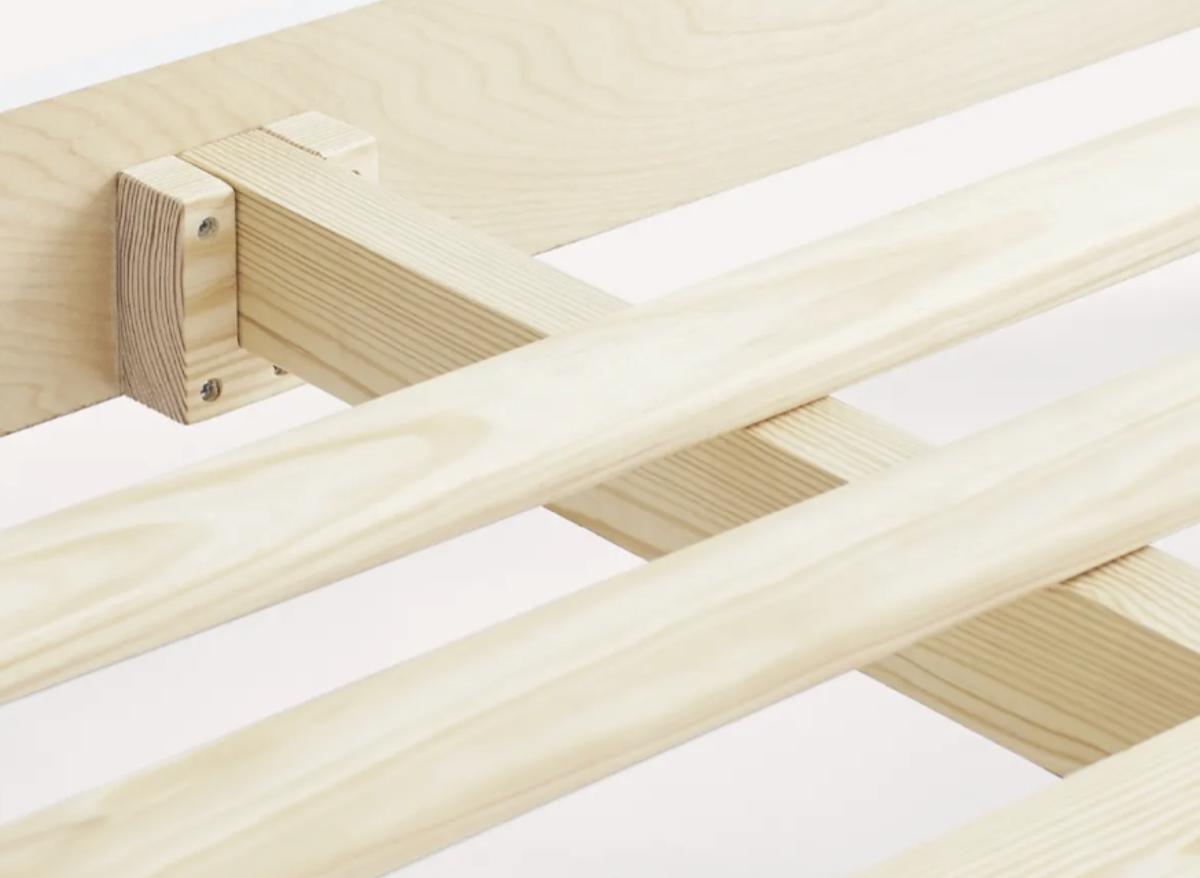
| Frame Rails | Maple and poplar industrial veneer core (hardwood plywood) |
| Legs | 100% solid Appalachian maple |
| Slats | 100% solid Southern Yellow Pine, ~3.3" spacing, 12+ slats |
| Finish | Water-based, UV-cured, zero-VOC, formaldehyde-free |
| Adhesives | Proprietary formaldehyde-free technology |
| Certifications | FSC, CARB compliant, LEED compliant |
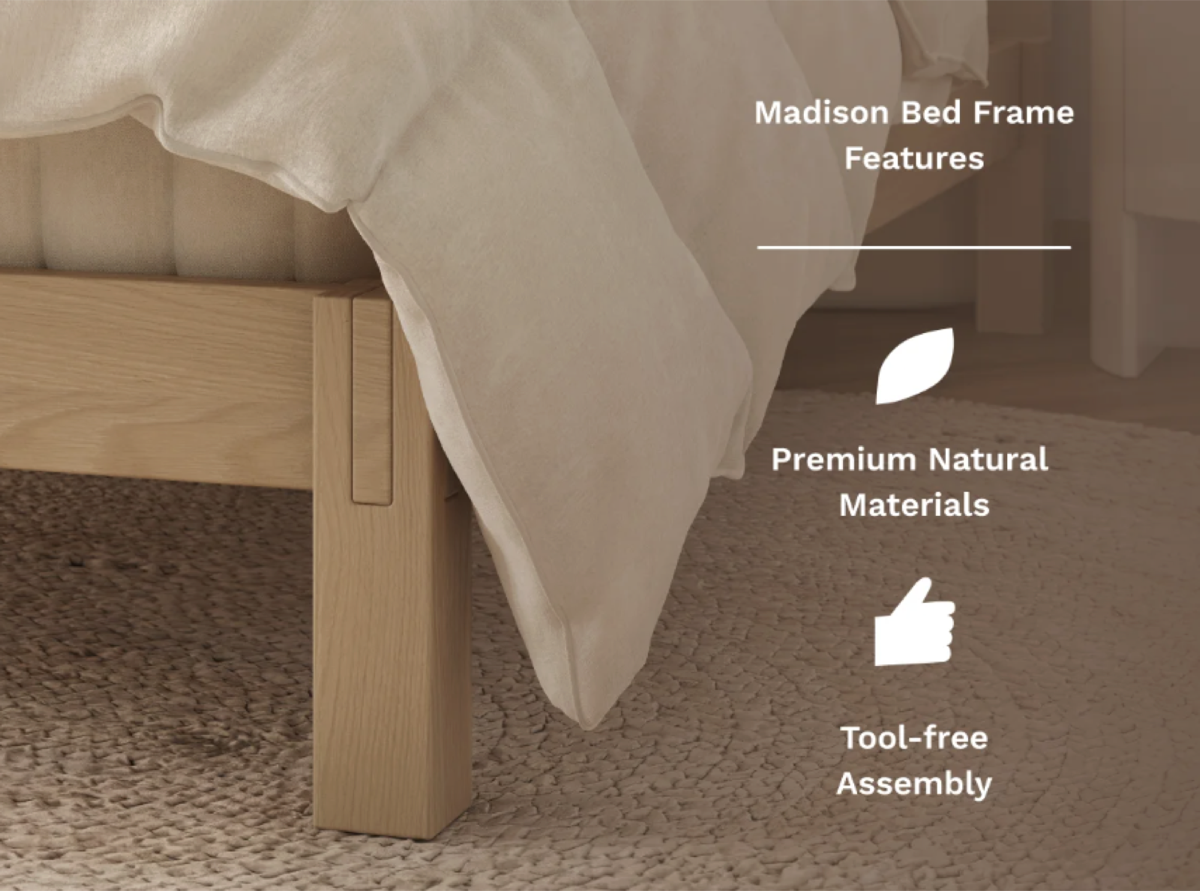
| Assembly | Tool-free Japanese-style joinery — no metal hardware |
| Weight Capacity | 1,500 lbs (Queen) |
| Price (Queen) | ~$440–$620 (varies with sales) |
| Warranty | 5 years |
| Trial | 100 nights |
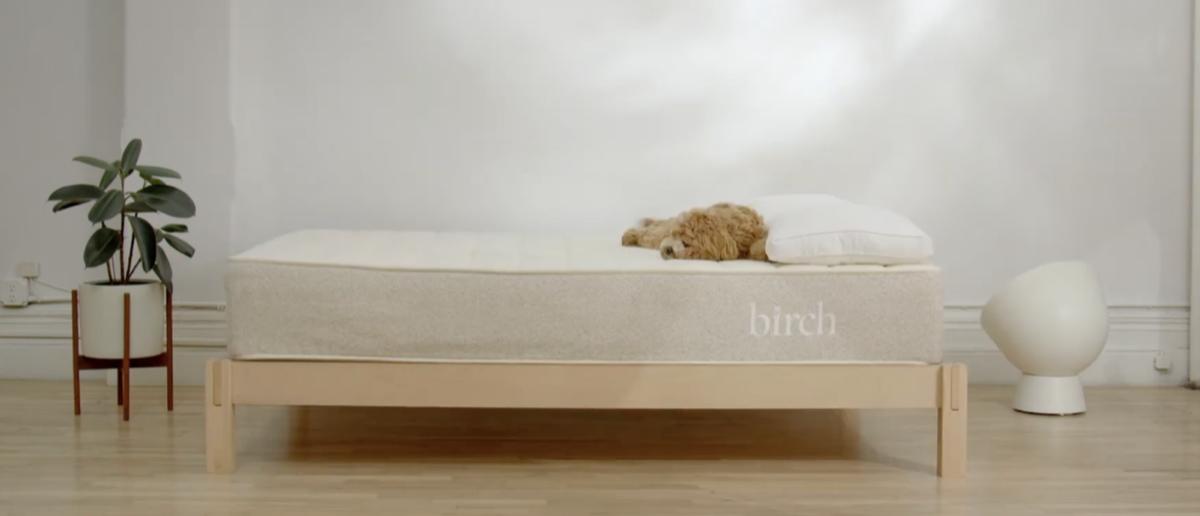
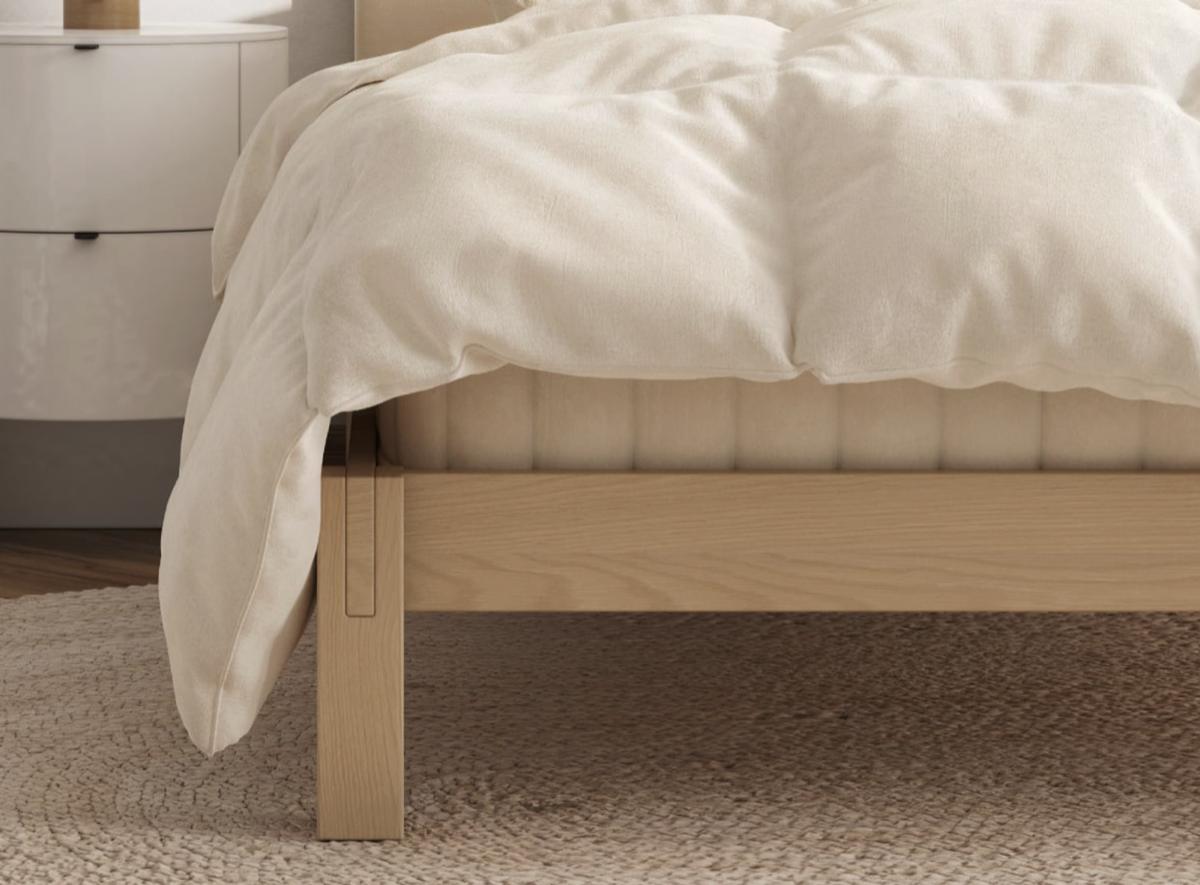
The Madison Bed from Birch Living (a sub-brand of 3Z Brands, which also owns Helix Sleep and Brooklyn Bedding) uses a combination of materials: the legs are 100% solid Appalachian maple, the slats are 100% solid Southern Yellow Pine, and the bed rails are maple and poplar industrial veneer core — essentially hardwood plywood, not solid wood throughout. All wood is FSC-certified from Appalachian forests, with the Southern Yellow Pine sourced from Jordan Timberlands in the Carolinas.
Non-toxic assessment: The finish is water-based and UV-cured with zero VOCs and no formaldehyde — one of the better finish disclosures on this list. The adhesive uses "proprietary formaldehyde-free technology" and the frame is CARB compliant. Important distinction: the bed rails are not solid wood — they're hardwood plywood (veneer core), which is a higher-quality engineered wood than MDF or particleboard but still technically engineered. The frame does not carry GREENGUARD Gold certification — only Birch Living's mattresses do. Tool-free assembly with Japanese-style joinery means minimal hardware and naturally noise-free joints.
Who it's for: Anyone who wants a budget-friendly frame with documented non-toxic finishes, FSC-certified wood, and the highest weight capacity on this list. The best value option here.
My take: At $440-$620 for a queen, the Madison is the most affordable option on this list — and it backs up its claims with real data. Zero-VOC UV-cured finish, formaldehyde-free adhesive, FSC-certified wood, and CARB compliance. That's more documentation than several frames here that cost three times as much.
I want to be transparent about two things. First, the bed rails are hardwood plywood (maple and poplar veneer core), not solid wood. This is structurally fine — hardwood plywood is actually stronger than solid wood in some applications, and it's a clear step above the MDF or particleboard I see in budget frames at my facility. Second, Birch Living is owned by 3Z Brands, the same parent company behind Helix Sleep and Brooklyn Bedding. That doesn't affect the product quality, but it's worth knowing this isn't a small artisan workshop — it's a large mattress conglomerate. The 1,500 lb weight capacity is the highest on this list, and the 100-night trial gives you a real opportunity to test it at home.
Budget Non-Toxic Options Under $250
Not everyone can spend $1,000+ on a bed frame. Here are legitimately safe options at lower price points.
IKEA NEIDEN (~$75-$100)
100% solid pine, completely unfinished. No MDF, no particleboard, no factory finish. You can apply your own non-toxic finish (tung oil, linseed oil, or zero-VOC water-based stain). Available in Twin and Full only. Pair with LURÖY slats ($30-60). Total investment with DIY finish: approximately $100-$150.
IKEA TARVA (~$200-$250)
Solid untreated pine in Twin, Full, and Queen sizes. Includes the SKORVA midbeam. Same unfinished approach as NEIDEN with more size options.
IKEA Products to Avoid
MALM (contains particleboard/fiberboard), BRIMNES (storage components use engineered wood), and anything listing "fiberboard," "particleboard," or "engineered wood" in the materials description.
Secondhand Solid Wood Furniture
A vintage solid wood bed frame that's 5+ years old has already completed its primary off-gassing. Pre-1970s antiques were often made without formaldehyde-based adhesives at all. Metal frames from any era are inherently non-toxic. Sources: Facebook Marketplace, Craigslist, estate sales, Habitat for Humanity ReStore.
Warning for Pre-1978 Painted Furniture
Lead-based paint was banned in 1978. Any painted bed frame from before this date likely contains lead. Test with 3M LeadCheck Swabs (~$12 at Home Depot). If positive: never sand or scrape (creates dangerous lead dust). Seal with 2+ coats of shellac to encapsulate, or consult professional remediation for valuable pieces.
Certifications: What They Actually Mean
This is where a lot of people get confused. Not all certifications are equal, and some are actively misleading when applied to bed frames.
GREENGUARD Gold (Strongest)
The strongest emissions certification. Tests for over 15,000 VOCs with specific limits far stricter than basic GREENGUARD. Total VOC emissions must stay below 220 μg/m³, and formaldehyde must remain under 7.3 ppb. Products are tested in controlled chambers simulating real-world conditions. Annual recertification required.
This is the one I look for first. Verify at UL Solutions' SPOT database (spot.ul.com).
FSC (Sustainability Only)
Certifies sustainable forestry practices only. Three labels exist: FSC 100% (all wood from certified forests), FSC Recycled (all recycled content), and FSC Mix (combination including "controlled wood").
FSC says absolutely nothing about toxicity. A frame can be FSC-certified while using formaldehyde adhesives and high-VOC finishes. It's a good sustainability credential, but don't confuse it with a health certification.
CARB Phase 2 / TSCA Title VI
Sets formaldehyde emission limits for engineered wood products. Since June 2018, this is federal law — all products sold in the US must comply.
Any company marketing CARB Phase 2 compliance as special is telling you their product is "not illegal." GREENGUARD Gold requires formaldehyde levels approximately 7x lower than CARB Phase 2.
CertiPUR-US (Foam Only)
This certification is for foam, not wood. If a bed frame manufacturer touts CertiPUR-US, it only applies to foam padding in headboards (if any).
It's meaningless for wood construction, metal frames, or finishes. Seeing CertiPUR-US prominently featured on a bed frame listing is actually a red flag — it suggests the company is using an irrelevant certification to appear safe.
Red Flags and Greenwashing to Avoid
I've been in this industry long enough to spot the marketing games. Here's what to watch for.
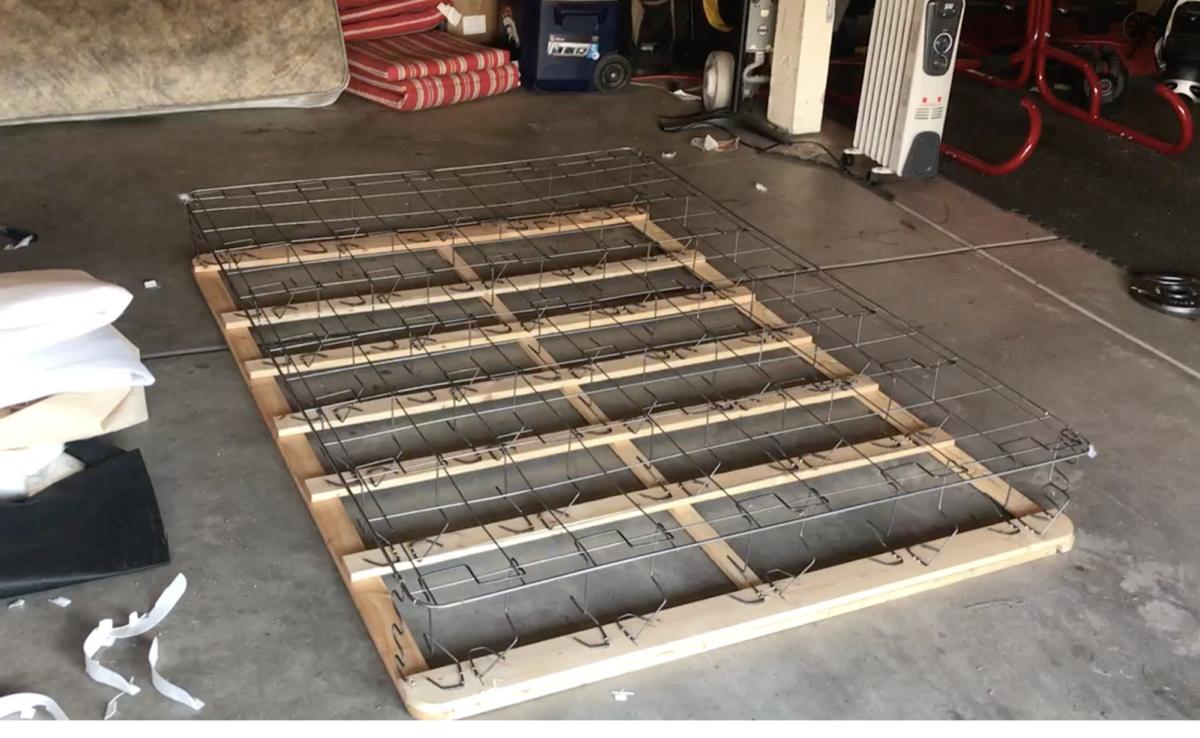
Processing mattresses and bed frames at our facility — we see every type of construction and material up close.
Vague Material Descriptions
- "Engineered wood" — Thin veneers glued to MDF or particleboard
- "Composite" — Blends wood fibers with plastics and resin binders
- "Laminate" — Decorative plastic or paper glued to particleboard
- "Wood veneer" — Ultra-thin wood over toxic cores
- "Furniture board" — Marketing for particleboard
If a product description uses any of these terms, the frame contains formaldehyde-emitting materials.
Eco-Buzzwords Without Specifics
"Eco-friendly," "green," "sustainable," "natural," "chemical-free" — none of these terms have regulated definitions. Formaldehyde occurs naturally. That doesn't make it safe to breathe for 7 years. Look for specific third-party certifications with verifiable claim numbers, not adjectives.
FSC Positioned as a Health Claim
FSC is about sustainable forestry. Period. A frame can be FSC-certified and still off-gas formaldehyde from its adhesives and VOCs from its finish. If FSC is the only certification listed and the company implies it means the frame is non-toxic, that's misleading.
Quick Comparison Table
| Brand | Queen Price | Material | Finish | Made In | Top Cert | Warranty |
|---|---|---|---|---|---|---|
| Luca Bed | From $1,797 | Solid rubberwood | Not disclosed | Vietnam | None listed | — |
| Avocado City | ~$699–$1,443 | Beech/alder/walnut | ECOS zero-VOC | CA, USA | GREENGUARD Gold | 10 yr |
| Floyd | ~$1,095–$1,145 | Birch plywood + steel | UV-sealed coat | USA (Virginia) | TSCA Title VI | 10 yr |
| Avocado Malibu | ~$1,399 | Solid maple | ECOS zero-VOC | CA, USA | GREENGUARD Gold | 10 yr |
| Luca Platform | From $995 | Solid rubberwood | Not disclosed | Vietnam | None listed | — |
| Puffy Capri | ~$1,495 | Solid European oak | Not disclosed | Not disclosed | None listed | Lifetime |
| Tatami Bed | ~$730–$900 | Solid poplar (FSC) | Water-based low-VOC | North America | FSC | 5 yr |
| Madison Bed | ~$440–$620 | Maple/poplar plywood + solid pine slats | Zero-VOC UV-cured | USA (Appalachian wood) | FSC, CARB | 5 yr |
The Bottom Line
The non-toxic bed frame market has real options at every price point — from a $75 IKEA pine frame you finish yourself to premium hardwood frames with lifetime warranties. The key is knowing what to look for and what to ignore. Here's my honest summary after deep-diving into every product on this list.
For documented non-toxic credentials: Avocado (City or Malibu). No contest. They tell you everything — finish brand (ECOS), glue brand (Titebond), certification numbers (GREENGUARD Gold, UL Formaldehyde-Free). Nobody else on this list comes close to that level of material transparency. If verified non-toxic claims are your top priority, start here.
For best construction quality: Luca Bed or Puffy Capri. Both use real Japanese joinery with solid hardwood — rubberwood for Luca (note: their "teak" and "walnut" labels are finish colors, not wood species), European oak for Puffy. These frames will last decades. The Luca Bed's slat system with proper center support is exactly what I'd want under my own mattress. Just know that neither company discloses their finish or adhesive details.
For best value: Madison Bed by Birch Living. At $440-$620, it's the most affordable option here and actually provides better documentation than some frames costing three times more — zero-VOC finish, formaldehyde-free adhesive, FSC-certified wood. The rails are hardwood plywood (not solid wood), but the weight capacity is the highest on this list at 1,500 lbs.
For modular flexibility: Floyd. Tool-free assembly makes it ideal for people who move frequently. Just be aware the panels are birch plywood with a honeycomb core, not solid wood — and TSCA Title VI compliance is the federal legal minimum, not a voluntary non-toxic standard.
For a budget solid wood option: Tatami Bed by The Futon Shop. FSC-certified solid poplar, water-based low-VOC finish, nearly 50 years of natural product manufacturing. Adjustable leg heights at ~$730-$900 for a queen.
Certification priority from most to least meaningful: GREENGUARD Gold → UL Formaldehyde-Free → eco-INSTITUT → CARB Phase 2 (legal minimum) → FSC (sustainability only) → CertiPUR-US (foam only, irrelevant for frames).
Your bed frame is part of a system. Pair it with a non-toxic mattress and clean bedding, and you've eliminated the major sources of chemical exposure in your sleep environment. That's not about being paranoid — it's about making informed choices about the air you breathe for eight hours every night.
Tim Sumerfield
Owner, Nationwide Mattress Recycling Company
20+ years in the mattress industry. I've recycled over 1.15 million mattresses since 2011 and see firsthand what makes bed frames last — and what makes them end up on my truck.